ServicesCalcium Removal and Tile Cleaning
Calcium Removal and Tile Cleaning in Rio Verde
That crusty white band at your waterline is calcium, and it only gets harder with time. We clean it off your tile without scratching the glaze, show you why it formed, and help you plan when the next cleaning should happen so it never turns into a big job.
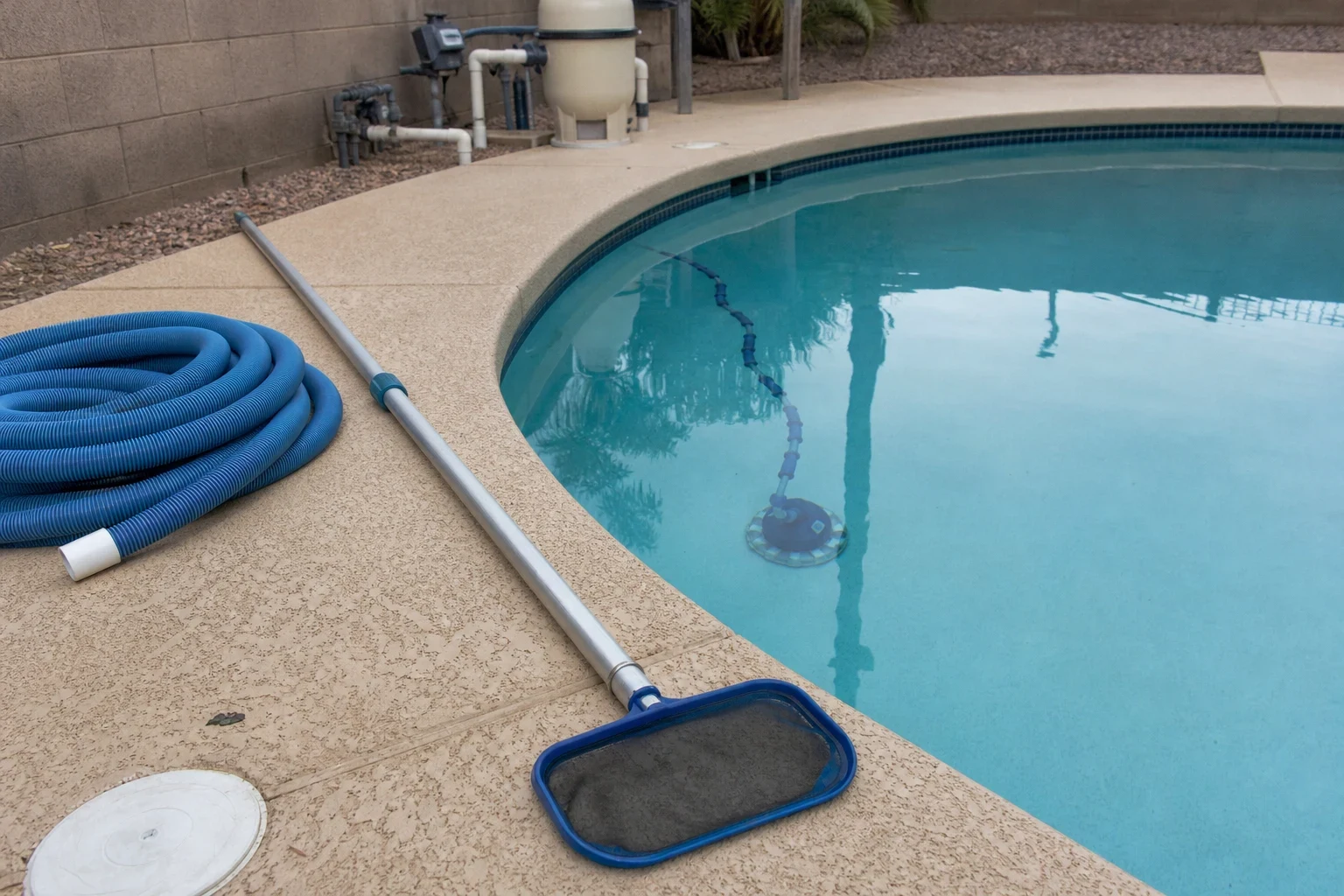
What calcium removal does for your pool
Water evaporates from your pool every day, but the minerals in it stay behind. They collect where the water meets the tile and harden into scale. Early on it is a soft, flaky white film that brushing can still touch. Left for a few seasons, it becomes a gray, glassy crust that a brush and household cleaners will not move.
We remove that buildup with the right method for your tile and the type of scale on it. Glazed ceramic tile can usually take bead blasting with a fine, soft media. Glass tile and natural stone need gentler media or hand work, because the wrong approach leaves permanent haze or scratches. We check before we start, not after.
The best time to book this is before the scale gets thick. Lighter buildup comes off faster and with less risk to the tile, which keeps the job smaller. We're firefighter owned and operated, and we run each job the same careful way: we set up cleanly, work methodically, and leave your deck the way we found it.
What's included in a tile and calcium cleaning
- Scale and tile check
- We look at the full waterline, spa and any water features, identify whether the scale is the softer carbonate type or the harder silicate type, and note the tile material. That tells us which method is safe.
- Lowering the water
- Most jobs need the water dropped a few inches below the tile line so we can reach the bottom edge of the scale. We handle the drop and bring the level back up when we finish.
- Bead blasting or hand cleaning
- For glazed tile we use low-pressure blasting with a fine media that breaks up scale without cutting the glaze. Glass tile, stone and delicate spots get hand tools and milder products instead.
- Spa edges and water features
- Spillways, sheer descents and raised spa walls collect scale fast because water splashes and dries on them all day. We clean these along with the main tile line.
- Cleanup of the deck and pool
- We contain blast media, rinse the deck, and vacuum settled media out of the pool so nothing ends up in your filter.
- Water balance advice
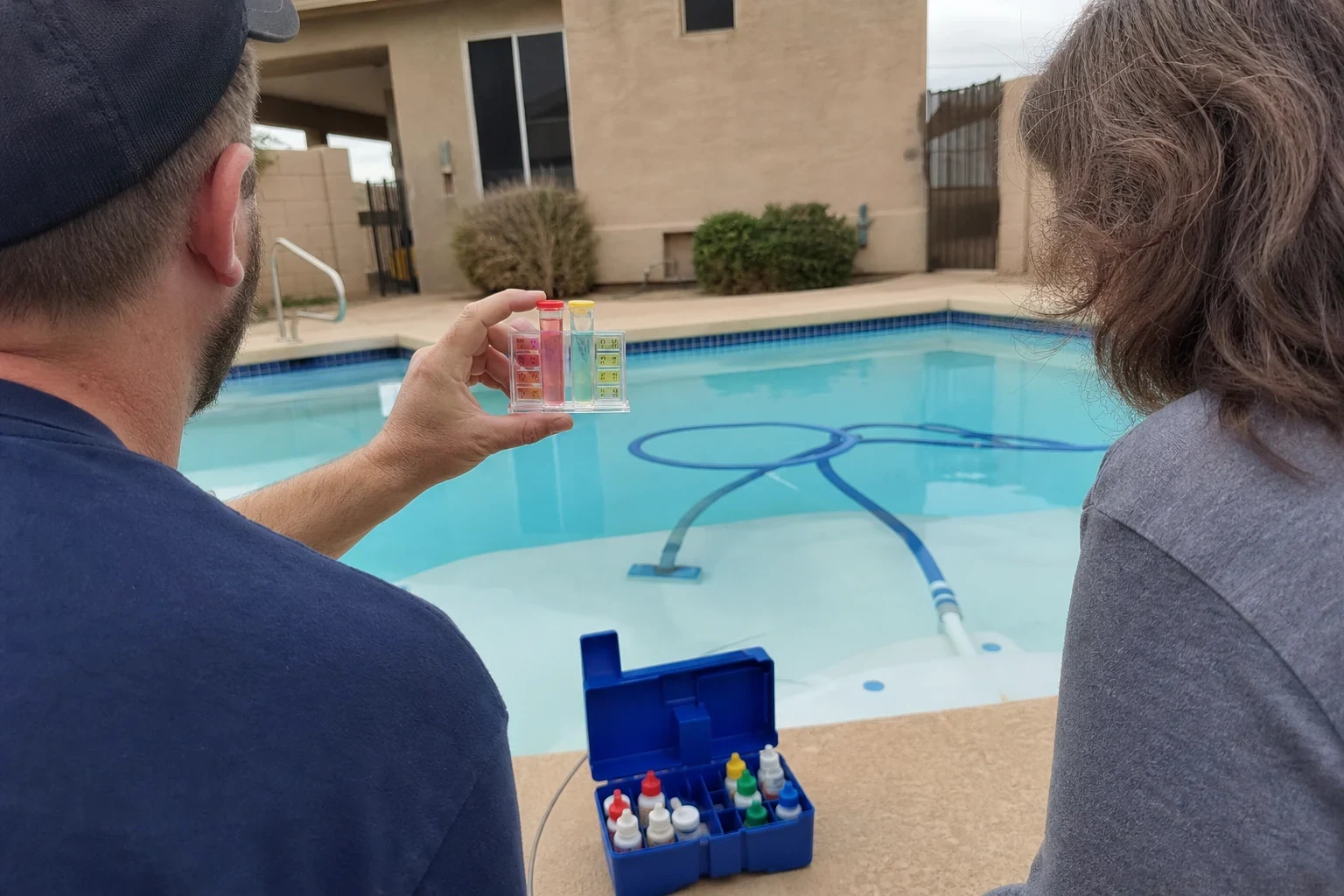
- Before we leave, we test your water and explain which numbers push scale to form, so you know what to watch between cleanings.
Signs your tile is ready for calcium removal
A white ring at the waterline
A chalky band along the tile is the first stage. This is the easiest and least costly point to have it cleaned.
Rough, gritty tile
Run your hand along the tile line. If it feels like sandpaper, scale has hardened onto the surface and brushing alone is no longer enough.
Gray or glassy crust
Scale that looks gray or almost transparent and will not chip off with a fingernail is the harder silicate type. It takes longer to remove, so waiting only adds to the work.
White streaks on spillways and rock features
Mineral drips on water features usually mean the water chemistry favors scale. Cleaning them and adjusting the balance together stops the cycle.
Tile grout looks cloudy or stained
Scale often hides grout damage underneath. Cleaning it off lets you see whether anything needs attention before it gets worse.
What affects the cost of calcium removal
Every pool is quoted on its own, because two pools of the same size can carry very different amounts of scale. We explain each factor when we give you your quote, so you know what you are paying for before we start. If you can catch the buildup early, the job is usually smaller.
Length of the tile line
The perimeter of the pool, plus any spa, raised walls and water features, sets how much tile we clean.
How thick and hard the scale is
Thin carbonate scale comes off quickly. Thick silicate scale that has built up for years takes more time and more careful passes.
Tile material
Glass and natural stone tile need slower, gentler methods than standard glazed ceramic, which adds time.
Access around the pool
Tight side yards, steep grades or long distances from the driveway to the pool can make setup slower.
Timing with other work
If your water is also due for a pool drain and refill or your plaster needs acid washes, pairing the work can save a separate water drop.
How the job goes on the day
- 1
Free quote by phone
You tell us about your pool, the tile, and what the waterline looks like. We give you a free quote and pick a date that works around your plans.
- 2
Set up and lower the water
We protect nearby plants and surfaces, then drop the water below the scale line. Your equipment is shut down safely while we work.
- 3
Remove the scale
We work around the pool section by section, checking the tile as we go so we can switch to gentler methods wherever the surface calls for it.
- 4
Rinse, vacuum and refill
We rinse the deck, pull settled media out of the pool, refill to the right level and restart your equipment.
- 5
Walk-through and a plan
We show you the finished tile, share the water test, and suggest a realistic timeline for the next cleaning based on how quickly your scale built up.
Calcium removal and tile cleaning questions
Will bead blasting damage my tile?
Not when the method matches the tile. Glazed ceramic handles fine, soft media at low pressure well. For glass tile and stone we switch to gentler media or hand cleaning, and we test a small area first if we have any doubt.
How long will the tile stay clean?
It depends on your water chemistry and how much the pool evaporates. Many pools go a long while before scale is noticeable again when the water stays balanced and the tile line gets brushed regularly. We tell you what we see in your water so you can plan the next cleaning instead of being surprised by it.
Do you have to drain the pool?
No. We only lower the water a few inches below the tile line. A full drain is a separate job, and we only suggest it when your water has built up so many dissolved minerals that rebalancing no longer works.
Can weekly service keep the scale from coming back?
It helps a lot. With weekly pool cleaning, the tile line gets brushed and the water gets balanced on a regular schedule, which slows new buildup. Our weekly service comes with chemicals included in the monthly price, and the first month of weekly service is free.
Is calcium removal the same as an acid wash?
No. Calcium removal targets scale on the tile at the waterline while the pool stays mostly full. An acid wash cleans stains from the plaster surface and requires a drained pool. Some pools benefit from both, and we will tell you honestly if yours only needs one.
Get ahead of the scale on your tile
Tell us what your waterline looks like and we will give you a straight answer on what it needs and when. Catching it now keeps the job smaller and easier to budget.