ServicesPool Drain and Refill
Pool Drain and Refill in Rio Verde
Years of minerals and stabilizer can leave your water so loaded that balancing it feels like a losing battle. We drain your pool with care, inspect and protect the surface while it sits empty, then refill with balanced water. We'll help you schedule it for cooler months, well ahead of any rush.
Why pool water eventually needs replacing
Every week the sun evaporates water from your pool, but the minerals stay behind. Top-off water adds more calcium, and stabilized chlorine tablets leave cyanuric acid that never burns off. After a few years the water is so loaded with dissolved solids that chlorine works poorly, scale forms faster and balancing becomes a weekly fight.
Draining and refilling resets all of that at once. The trick is timing. An empty pool sitting in summer heat can crack or discolor the plaster, and draining with the wrong method can stress the shell. We prefer to schedule this work between late fall and early spring, so we help you see it coming and book it on your terms.
What your drain and refill includes
- Water testing first
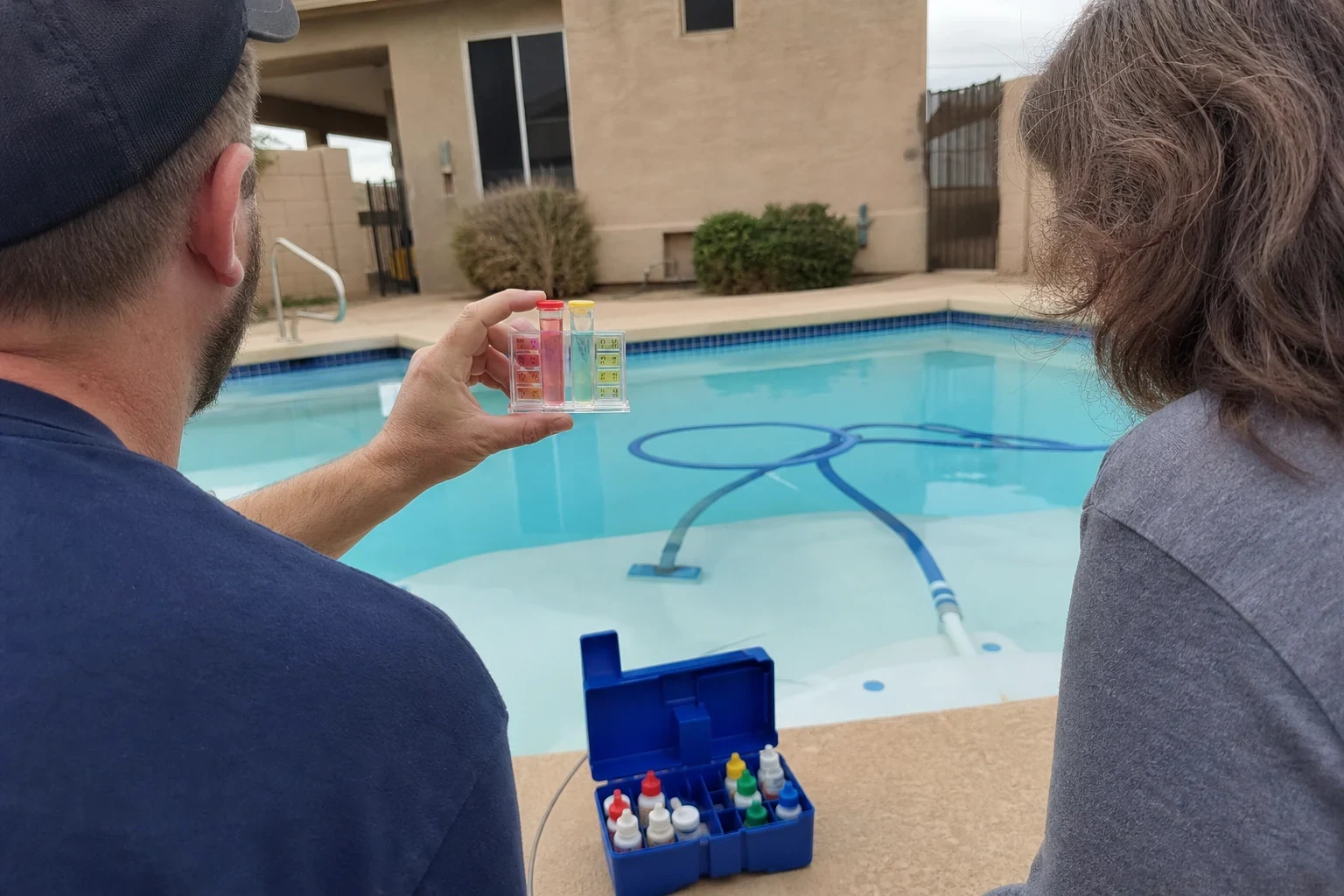
- We test total dissolved solids, calcium hardness and cyanuric acid so you know whether a full drain is really needed. Sometimes a partial drain does the job, and we'll tell you if that's the case.
- Controlled draining
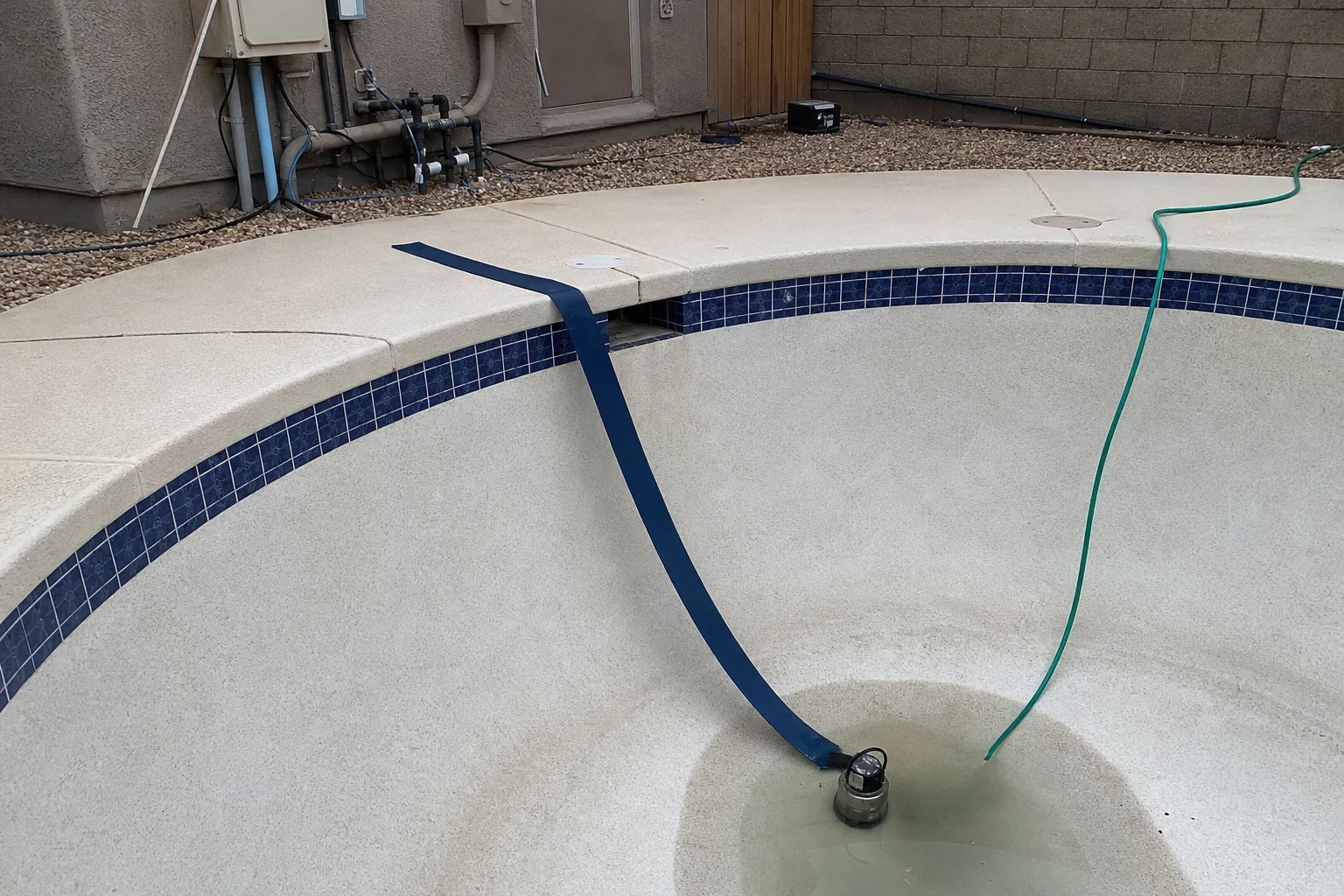
- We use a submersible pump and watch the water level the whole way down. We check the discharge rules where you live and route the water where it's allowed to go.
- Hydrostatic relief valve check
- Once the pool is empty we open and inspect the relief valve in the main drain, which protects the shell from groundwater pressure.
- Shell inspection with photos
- With the water gone, cracks, chips, loose tile and worn plaster are easy to see. We photograph what we find and explain what can wait and what shouldn't.
- Refill and startup balancing
- We set up the fill, then balance the fresh water for pH, alkalinity and calcium so the new water protects your plaster from the first day.
Signs your pool is ready for fresh water
Chemicals stop working
You add chlorine and the reading barely moves, or algae keeps coming back even with good levels. High stabilizer is a common cause.
White crust that keeps returning
Scale along the tile line and on fittings that reappears soon after cleaning points to water carrying too much calcium.
Cloudy water with a clean filter
If the filter is clean and circulation is good but the water still looks dull, dissolved solids may be the problem.
It's been several years
Most pools in our area benefit from fresh water every few years. If you can't remember the last drain, it's worth a test.
Work planned on the surface
An acid wash, tile cleaning or plaster repair needs an empty pool, so it makes sense to line those up with a drain.
How the job runs from start to finish
- 1
Test and plan
We test your water, talk through what we found and pick a date in cooler weather. You get your quote by phone before anything is scheduled.
- 2
Drain safely
We shut down your equipment, set the pump and drain at a steady pace. As a firefighter owned and operated company, we keep the work area safe and make sure no one, kids or pets included, is near an open, empty pool unattended.
- 3
Inspect and clean the shell
We check the relief valve, rinse the floor and walls, and inspect the surface. If you've booked an acid wash or calcium removal and tile cleaning, we do it now.
- 4
Refill and restart
We refill, restart your pump and filter, and balance the new water. We'll let you know when it's ready to swim.
What affects the cost
Every pool is different, so we price each job after seeing yours and testing the water. Your quote is free and explained line by line. Planning a season ahead also lets you budget for any surface work while the pool is empty.
- Pool size
- Larger pools take longer to drain and refill, and need more startup chemicals.
- Added surface work
- Pairing the drain with an acid wash, tile cleaning or a plaster repair adds labor, but saves draining twice.
- Discharge setup
- Where the water is allowed to go and how far we need to run the hose can change the setup time.
- Fill water balance
- Our local tap water is hard, so how much balancing the fresh water needs affects startup chemical costs. The water for the refill runs through your home's meter.
Drain and refill questions
Something not covered here? (480) 576-5443
How often should I drain my pool?
Most pools here do well with fresh water every few years, depending on how much you top off and what chlorine you use. Testing tells us more than the calendar. We'll check your levels and tell you honestly if you can wait.
What's the best time of year to do it?
Late fall through early spring. Cooler temperatures are easier on exposed plaster, and the fresh water is simpler to balance. We avoid draining during summer heat.
Can I just drain it myself?
You can, but there are real risks. Draining fast or leaving the pool empty too long can damage the surface, and groundwater pressure can push on an empty shell. We monitor the whole process and check the relief valve so those risks stay low.
How long will my pool be out of use?
Usually a couple of days from draining to swimming, depending on pool size, your water pressure and any surface work. We'll give you a realistic timeline when we quote.
Can you take care of the water after the refill?
Yes. Many customers move straight onto our weekly pool cleaning, where chemicals are included in the monthly price. There's no contract, so you're free to cancel whenever you choose. You also get a Pool Health Report by email after each visit.
Plan your fresh start before summer
Book your drain during cooler months and you'll have clean, balanced water when the heat arrives. Tell us about your pool and we'll walk you through the timing and cost.