ServicesEquipment Installation
Pool Equipment Installation in Rio Verde
We install pumps, filters, heaters, salt systems and automation sized to your pool and plumbed cleanly. Our goal is to replace aging equipment on your schedule, with a clear plan and a budget you set ahead of time, before a breakdown sets the timeline for you.
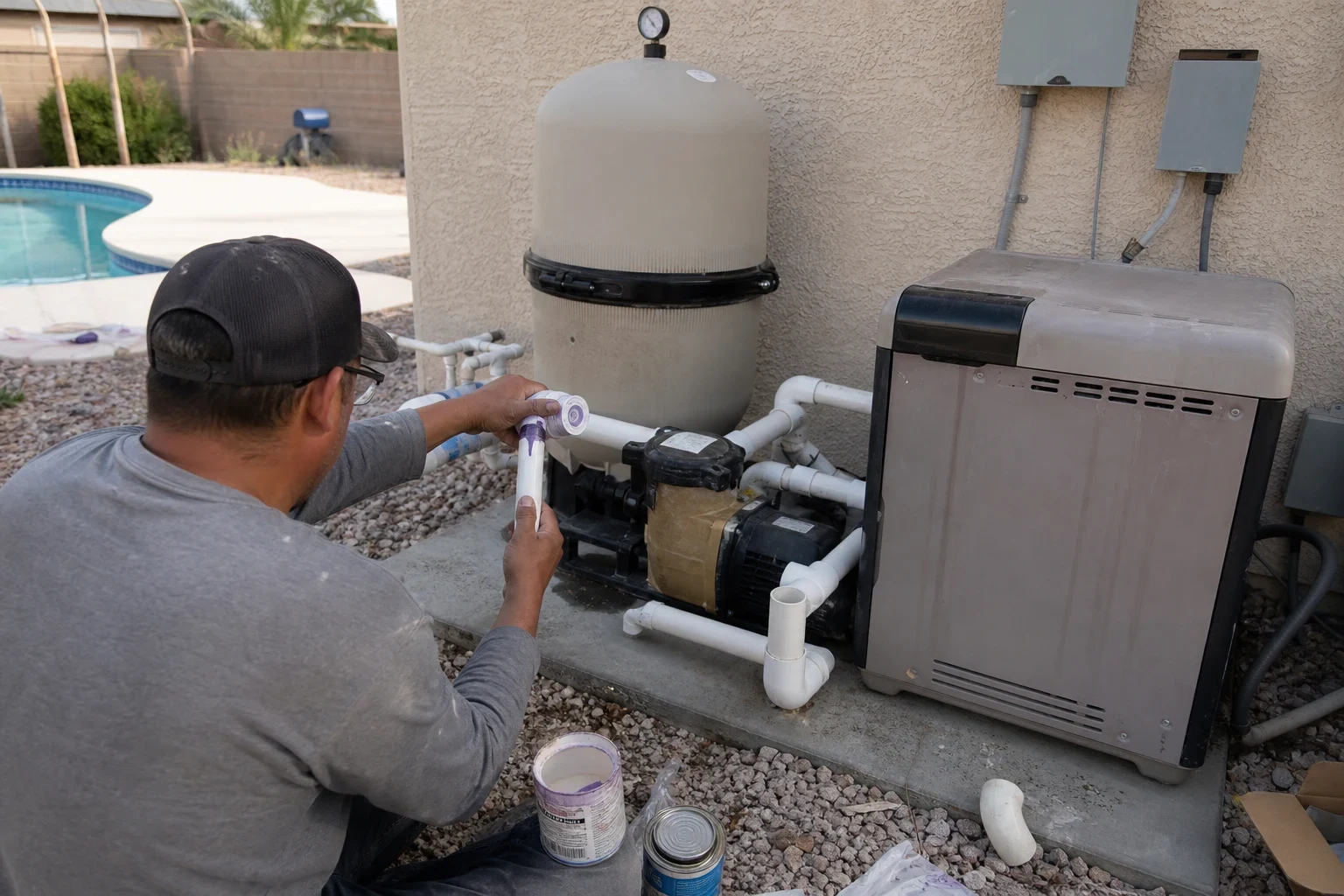
New equipment, planned instead of rushed
Most pool equipment gets replaced in a hurry. A pump motor seizes in July, the water turns cloudy within days, and the homeowner buys whatever is in stock. We would rather help you see it coming. When we look at your equipment pad, we tell you what is working, what is wearing out and roughly how long it has left. That way you can budget for a replacement months ahead.
Desert summers are hard on equipment. Pumps run long hours, and sun bakes lids, unions and wiring covers. Swapping a tired pump or filter in spring, before the heat peaks, keeps your pool clear when you actually want to use it.
Rio Verde Pool Cleaning is firefighter owned and operated, and that background shows in how we handle the electrical and gas side of an install. Bonding, breaker sizing and gas connections get checked carefully, never assumed.
What we install
Variable-speed pumps
A variable-speed pump can run slowly for most of its cycle and speed up only for vacuuming or a spa. We set the schedule so you get good circulation without paying for full speed all day long.
Filters: cartridge, sand or DE
We match the filter type and size to your pool volume and pump flow. An undersized filter clogs fast and makes the pump work harder, so we size it with some room to spare.
Heaters and heat pumps
Gas heaters warm water quickly, while heat pumps cost less to run in mild weather. We walk through how you actually use the pool so you pick the one that fits, not the most expensive one.
Salt chlorine generators
A salt cell makes chlorine from dissolved salt, which keeps levels steadier between visits. We install the cell, set the output and explain how scale builds up on the plates in our hard water.
Automation and timers
Automation lets you control pump speed, lights and heat from a panel or your phone. We wire it in, program the schedules and show you how to change them.
Plumbing and valve updates
Old, cracked PVC and stiff valves get replaced while the pad is open. Clean plumbing with fewer tight elbows also helps a new pump move water more easily.
Signs it's time to plan new equipment
- Loud or screeching pump
- Grinding or a high whine usually means motor bearings are wearing out. It may run for a while, but this is the time to plan a replacement, not after it quits.
- Short filter cycles
- If pressure climbs right after a cleaning, the filter may be too small or the media may be worn out.
- Heater that struggles
- Long warm-up times, frequent error codes or soot near the burner point to a heater near the end of its life.
- Cracked housings and leaks at the pad
- Sun-faded, brittle pump lids and drips at unions get worse over time. Small leaks also waste water and can pull air into the system.
- High power bills
- An older single-speed pump running eight hours a day can be one of the biggest electric loads at your home. Upgrading often makes sense once you compare running costs.
How an installation goes
- 1
Look at your current setup
We check your pump, filter, heater and plumbing, note the pool volume and look at your electrical and gas supply. You hear what needs replacing now and what can wait.
- 2
Written plan and quote
You get a line-item quote showing the equipment, the labor and any plumbing or electrical work. If your project needs a permit, we tell you up front.
- 3
Install day
We shut off power, remove the old equipment and set the new pieces on a level pad. Plumbing gets glued and pressure-checked, and wiring and bonding are connected and inspected before anything runs.
- 4
Startup and walkthrough
We prime the system, check for leaks, set the schedules and show you the controls. The old equipment and packaging leave with us.
What affects the cost
Equipment prices vary widely, and labor depends on what we find at your pad. Your quote lists each piece separately so you can see where the money goes. Knowing the numbers early lets you set a budget and choose the timing.
- Equipment type and size
- A variable-speed pump costs more up front than a single-speed, and a heat pump costs more than a small gas heater. Sizing to your pool keeps you from overpaying for capacity you won't use.
- Plumbing changes
- Swapping like for like is simpler. Moving to a different filter type or adding a heater usually means new pipe runs and valves.
- Electrical and gas work
- New circuits, a larger breaker, updated bonding or a longer gas line add to the job. We check your existing supply before quoting so these costs don't come as a surprise.
- Pad condition and access
- A cracked pad, tight side yard or equipment tucked behind a wall takes more time to work on.
Equipment installation questions
- Should I repair my pump or replace it?
- We look at two things first: how old the pump is and which part gave out. On a fairly new pump, a failed seal or capacitor is usually a sensible fix through our pool repair service. On an older single-speed unit with a worn-out motor, that same money often goes further toward a variable-speed pump. You get a straight recommendation, and the choice stays yours.
- How long does an install take?
- Swapping a pump or filter for a similar model usually fits into part of a day. Heaters, automation, or jobs that need new plumbing or electrical work take longer, and we give you a realistic timeline along with your quote.
- Will my pool be usable during the work?
- Yes, the water stays safe to swim in. It just won't circulate or filter while the equipment is disconnected. After startup, everything runs on its normal schedule again.
- When is the best time to replace equipment?
- Spring and fall work best. Equipment does its hardest work in summer, so replacing worn parts before the heat cuts down on surprises. It also gives you time to choose the right model instead of taking whatever is on the shelf.
- Can you install equipment I already bought?
- In many cases, yes. Share the model when you call, and we'll check that it suits your pool and plumbing before we put the job on the calendar.
Plan your next upgrade before it's urgent
Tell us what you have and what's giving you trouble. We'll walk through your options, your budget and your timing, with no pressure to decide on the spot.